

Grain Spawn vs Substrate Spawn in Mushroom Cultivation


If you are exploring mushroom growing in more detail, you will quickly come across the term spawn. It is one of the most important parts of the cultivation process, acting as the starting point for healthy mushroom growth.
Two of the most common types are grain spawn and substrate spawn, and understanding the difference between them can make a significant impact on your results.
Whether you are growing at home or scaling up, choosing the right type of spawn helps improve colonisation speed, reduce contamination risk and support better yields.
What This Article is About
This article explains the difference between grain spawn and substrate spawn, how each is used in mushroom cultivation, and when to choose one over the other. It also explores the advantages, limitations and practical considerations for growers at different stages.
What is Mushroom Spawn?
Mushroom spawn is a carrier material that has been fully colonised by mycelium. It is used to introduce mushroom culture into a growing medium, allowing the fungus to spread and eventually produce mushrooms.
Instead of starting from spores, which can be unpredictable, growers use spawn to ensure consistent and reliable growth. This makes the process more efficient and reduces the risk of contamination.
What is Grain Spawn?
Grain spawn is made by inoculating sterilised grains such as rye, wheat or millet with mushroom mycelium. Once colonised, the grains become a highly active and nutrient-rich source of growth.
Each individual grain acts as an inoculation point, allowing the mycelium to spread quickly when introduced to a bulk substrate. This is one of the main reasons grain spawn is so widely used.
Grain spawn is particularly popular among growers who want fast colonisation and strong initial growth. It is often used as a first step before transferring to a larger substrate.
What is Substrate Spawn?
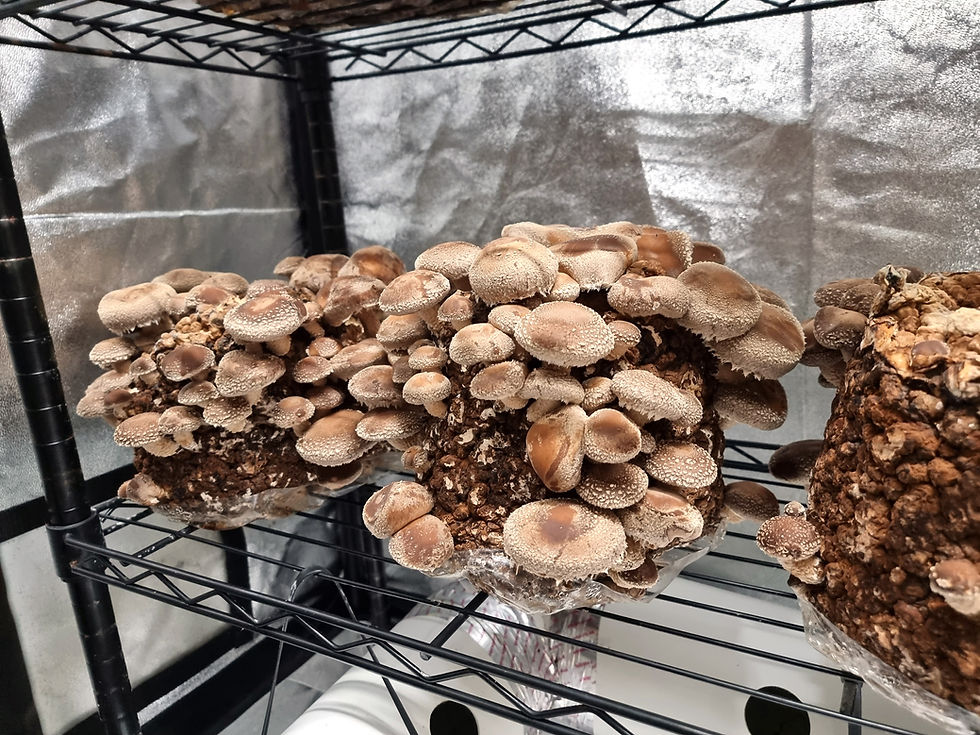
Substrate spawn refers to a material such as sawdust, straw or supplemented mixes that has already been colonised by mycelium. Unlike grain spawn, which is primarily used to inoculate, substrate spawn is closer to a final growing medium.
In many cases, substrate spawn can be used directly to produce mushrooms, especially in smaller-scale or ready-to-fruit setups. It is often easier to handle and can be more forgiving for beginners.
Some pre-prepared growing products use this approach, allowing users to focus on maintaining the right environment rather than preparing materials from scratch.
The Key Difference Between Grain Spawn & Substrate Spawn
The main difference between these two types of spawn lies in how they are used and how quickly they perform.
Grain spawn is designed for speed. Because it contains many small inoculation points, it allows mycelium to spread rapidly through a new substrate. This makes it ideal for scaling up production or working with larger volumes.
Substrate spawn is designed for simplicity. It is often used as a final growing medium or in systems where ease of use is more important than speed. It can reduce the number of steps required, which is helpful for beginners.
Another important difference is contamination risk. Grain spawn is highly nutritious, which makes it more vulnerable to contamination if not handled correctly. Substrate spawn, depending on its composition, can sometimes be more stable in less controlled environments.
When To Use Grain Spawn
Grain spawn is typically used when you want to expand your growing process.
For example, you might start with a small amount of colonised grain and use it to inoculate a larger batch of substrate such as a supplemented sawdust mix. This allows you to produce more mushrooms from a relatively small starting point.
It is also useful when working with species that benefit from rapid colonisation, such as Oyster mushrooms. Faster colonisation reduces the window in which contaminants can take hold, improving overall success rates.
Because of its efficiency, grain spawn is widely used in both hobby growing and commercial production.
When To Use Substrate Spawn
Substrate spawn is often chosen for convenience and simplicity.
For home growers, this approach can make mushroom cultivation much more accessible. It removes the need for specialised equipment and reduces the risk of errors during preparation.
Which is Better For Beginners?
For most beginners, substrate spawn is the easier starting point.
It simplifies the process and allows you to learn the basics of mushroom care without needing to manage sterilisation or inoculation. This can help build confidence before moving on to more advanced techniques.
Grain spawn, while more efficient, requires greater attention to cleanliness and environmental control. It is best suited to growers who already understand the fundamentals and want to increase their output.
That said, both approaches have value. Many growers start with substrate-based systems and gradually move towards using grain spawn as they gain experience.
How Spawn Choice Affects Yield and Quality
The type of spawn you use can influence both yield and overall mushroom quality.
Grain spawn often leads to faster colonisation, which can result in more consistent yields when conditions are well controlled. This is particularly important in larger setups where efficiency matters.
Substrate spawn, while sometimes slower, can still produce excellent results when used correctly. The key is maintaining the right balance of moisture, fresh air and temperature.
Ultimately, the success of your grow depends on more than just the spawn. Factors such as substrate quality, environmental conditions and ongoing care all play a role.
Common Mistakes When Working With Spawn
One of the most common mistakes is poor hygiene. Both grain spawn and substrate spawn require clean handling to avoid contamination.
Another issue is using too little spawn. This can slow colonisation and increase the risk of competing organisms taking over.
Environmental conditions are also critical. Without sufficient fresh air, stable temperatures and proper moisture levels, even the best spawn will struggle to perform.
Why Understanding Spawn Matters
Learning the difference between grain spawn and substrate spawn gives you more control over your growing process.
It allows you to choose the right approach based on your goals, whether that is simplicity, speed or scalability. It also helps you troubleshoot issues more effectively, as you will have a clearer understanding of how each stage works.
As you gain experience, this knowledge becomes increasingly valuable, especially if you decide to expand your setup or experiment with different mushroom varieties.
Why You Can Trust Us
Merit Mushrooms works directly with gourmet mushroom cultivation and understands the practical challenges involved in growing high-quality produce. From supplying fresh mushrooms to offering accessible growing kits, the focus is always on real-world results.

Comments